The narrator’s guilt after the major’s assassination
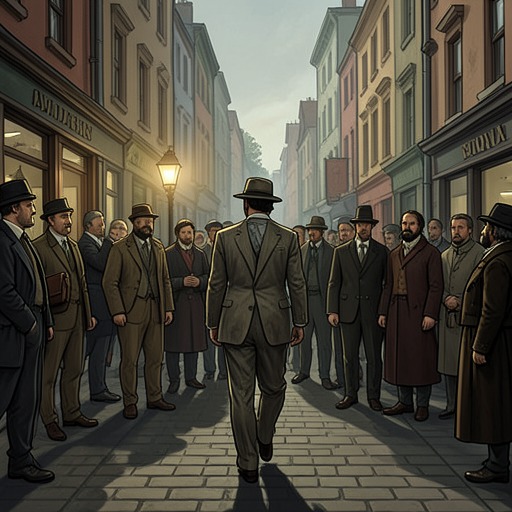
The SympathizerThe unnamed narrator’s guilt after The crapulent major’s assassination is not a settled feeling but a recurrence: an image that persists with his eyes open or closed, then resurfaces amid exile, work, and conflicted relationships. The narrator’s remorse over killing a man he comes to regard as relatively innocent unsettles revolutionary justifications and makes the assassination a continuing test of what responsibility can mean in a war where, as Man insists, the revolutionaries themselves are implicated.
The assassination’s return
After sharing rye with Bon during television celebrations of the United States Bicentennial, the narrator lies down and cannot escape the sight of The crapulent major’s third eye. It remains visible whether his eyes are open or shut, and seems to weep at what it can see about him. The image turns the major’s death into an inward witness: the narrator cannot put the act behind him simply by leaving the scene or closing his eyes.
The vision’s force lies partly in its uncertainty. The eye belongs to the dead major as the narrator imagines him, but its gaze is directed toward the narrator’s own deeds and beliefs. Guilt therefore appears less as a clear verdict than as an encounter with knowledge the narrator would rather avoid. The major’s imagined grief does not tell the narrator how to atone; it makes evasion difficult.
Moral argument with Man
In his account to The Commandant, the narrator says plainly that the major’s death troubles him. He judges The crapulent major relatively innocent, a qualification that matters in a world where innocence seems scarce rather than secure. The narrator recalls how, in Saigon, he could visit the basilica each week with Man and discuss his misgivings. In the camp, he is alone with his actions and beliefs, yet longs to hear Man’s response again.
The remembered conversation had concerned another consequence of the narrator’s clandestine work: he had passed Man film recording a Ranger battalion’s assault plans, knowing the information would lead to deaths. Man’s answer did not promise innocence. He argued that those who die are not innocent, but neither are the revolutionaries; their knowledge and actions have already implicated them. The principle offers the narrator a political explanation for killing, but it does not erase the distinction he feels between necessity and the major’s relative innocence. His appeal to Man is telling: he knows the argument already and still needs it repeated, as if doctrine can steady a conscience without resolving it.
The dead among the living
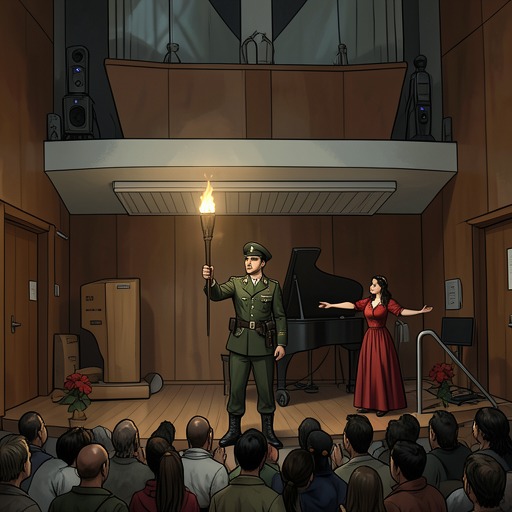
The major’s return also unsettles the narrator’s participation in rituals of exile. At a wedding banquet, the bride’s father is absent because he was captured while defending the western approach to Saigon on the city’s last day. The General praises him, and the veterans toast his heroism. Their boisterous confidence helps conceal their own unease about whether they have acted heroically. The narrator joins the performance, grinning and drinking cognac, while The crapulent major appears in the account as a spectral presence at the table, commenting on the contradictions the veterans would rather drink past.
The scene places private remorse beside collective self-justification. The narrator does not stand outside the veterans’ evasions: he takes part in the toast even as the dead major’s presence brings the cost of those evasions into view. The wedding’s absence and the assassination’s afterlife become linked through the unresolved losses surrounding the fall of Saigon. A public tribute can honor the missing father, but it cannot settle the narrator’s private question about the man he killed.
Exile, distraction, and recurrence
Later, remorse follows the narrator into the United States. It returns several times a day, persistent enough to be compared to a debt collector. A paid film assignment offers a working respite from his American refuge, and the narrator recalls his mother’s encouragement as a reason he does not retreat from the opportunity. Yet work provides distance, not resolution: the guilt remains active while he prepares to leave.
His farewell dinner with Sofia Mori gives the conflict another intimate setting. He suspects that he may truly love her even as he has feelings for Lana. Sofia Mori reminds him of their commitment to free love and tells him that he is not obligated to her. The narrator accepts the principle but feels saddened, recognizing that he cannot simply combine free love with the security of conventional love. This relational uncertainty is not presented as the cause of his guilt over the assassination; rather, it shows how unsettled feeling travels with him beyond the immediate scene of violence.
A widening burden of responsibility
The narrator’s later recollections enlarge the moral field around his remorse. In a remembered interrogation-room account, he struggles to recall who was present and then recognizes the Communist agent. He knows that his own name was on the list she tried to swallow and that he had passed the list to Man. His narration thus brings his clandestine role into contact with the agent’s subsequent abuse by police. The account does not identify this episode as a direct consequence of killing The crapulent major, but it shows how the narrator’s guilt exists within a broader record of actions, knowledge, and complicity that cannot be cleanly separated from the violence around him.
Taken together, these returns make guilt a continuing condition rather than a single confession. Man’s revolutionary logic can explain why innocence is compromised, while the narrator’s recurring vision insists that explanation is not absolution. The dead major’s third eye, the narrator’s participation in the veterans’ toast, and the memories that surface in his testimony all keep the same question open: how can a revolutionary acknowledge the necessity he claims without pretending that necessity makes him innocent?